Hurtigruten is working towards drastically reducing and recycling edible food waste from its fleet operations, with a groundbreaking initiative building on circular economy principles. A specially designed reactor at one of its ports converts edible food waste into compost used to grow vegetables for Hurtigruten, aligning with Hurtigruten’s sailing towards zero-edible food waste.
Aligned with Hurtigruten’s core values of environmental responsibility and ethical business practices, the initiative underscores the company’s commitment to addressing the challenge of edible food waste. Hurtigruten has already implemented several initiatives aimed at reducing food waste onboard, reflecting its dedication to creating value through responsible practices. By collaborating with local partners and leveraging cutting-edge technology, Hurtigruten seeks to minimise edible food waste while maximizing resource utilisation throughout its coastal Norway journey.
“At Hurtigruten, we understand the importance of preserving our environment while offering unforgettable experiences to our guests,” said Hedda Felin, Chief Executive Officer. “Recognising that our operations inherently impact the environment, wildlife, and local cultures in the waters we sail in, we are committed to taking proactive steps to minimise our ecological footprint and promote responsible practices. Through this innovative initiative, we are dedicated to enhancing the sustainability of our iconic coastal cruises while preserving the natural beauty and cultural heritage of these regions.”
Subscribe to LATTE Cruise’s free eNewsletter to keep up to date with everything in the luxury cruise space.
From Farm to Fleet to Farm
The initiative encompasses a comprehensive approach to waste management, starting with the sorting of edible food waste onboard Hurtigruten’s Original Coastal Express ships during their year-round schedule along the coast of Norway, calling at 34 ports from Bergen in the south to Kirkenes in the north. This waste is then transported to Stamsund harbour during scheduled stops, where it undergoes transformation through a specially designed compost reactor. The reactor efficiently converts edible food waste into compost within 24 hours.
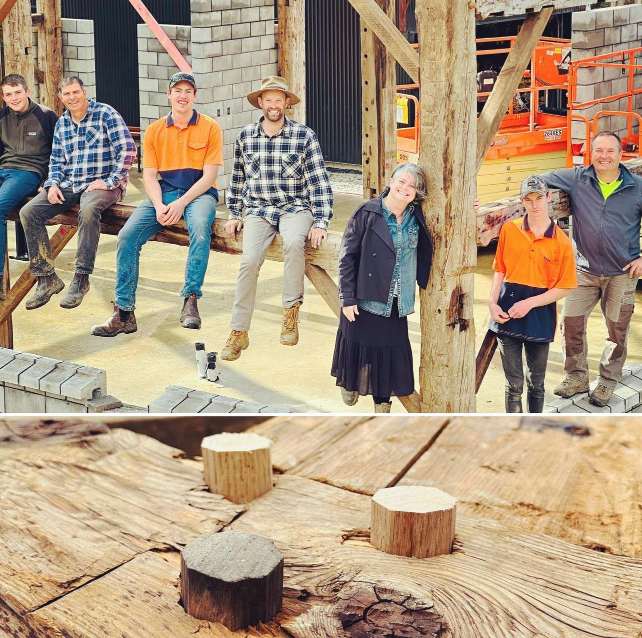
The resulting compost is then transported to Myklevik Gård, where it is utilised to enhance soil quality for agricultural purposes – to produce food that will once again end up on a plate aboard a Hurtigruten ship. This closed-loop system exemplifies the principles of circular economy, where waste is repurposed to support local food production, thus completing the cycle along Hurtigruten’s iconic coastal cruises.
After five years of dedicated efforts, Hurtigruten has already significantly reduced edible food waste, dropping from 261 grams per customer in 2019 to just 66 grams per guest in 2023.
“Our ultimate goal is to reduce edible food waste towards practically zero grams per guest,” said André Pettersen, Chief Product Officer and Hotel Operations. “Through collaboration and innovation, we are proud to shape the way towards a more sustainable future within travel globally.”
Pettersen explains that Hurtigruten’s three R’s approach to their fleet-wide food program, Norway’s Coastal Kitchen, emphasises Reduce, Reuse, and Recycle. This strategy involves minimising consumption through methods such as smaller portion sizes to avoid excess leftovers (Reduce), repurposing leftovers instead of discarding them (Reuse), and now completing the cycle by converting food waste into fertiliser for growing vegetables used in their menus (Recycle).
Making Further Waves
As part of the initiative, Hurtigruten is committed to fostering awareness and education among guests and crew members about the importance of reducing edible food waste and embracing sustainable practices. Engaging presentations, workshops, and interactive experiences will be integrated into the onboard programming to inspire positive change and empower individuals to make environmentally conscious choices.
Moreover, Hurtigruten aims to collaborate with local communities and stakeholders to expand the impact of the initiative beyond its ships. By sharing best practices and supporting initiatives that promote sustainable food systems and circular economy principles, Hurtigruten seeks to create lasting positive change along the coast of Norway and beyond.
“Through this multifaceted approach, Hurtigruten is not only reducing its environmental footprint but also fostering a culture of sustainability that will endure for generations to come,” said Pettersen. “As travellers increasingly prioritise sustainable-minded initiatives, Hurtigruten is demonstrating that unforgettable experiences can go hand in hand with responsible practices.”
Lead image: Head Chef Douglas Spiik preparing food for Hurtigruten’s guests onboard MS Trollfjord’s fine dining restaurant Røst.